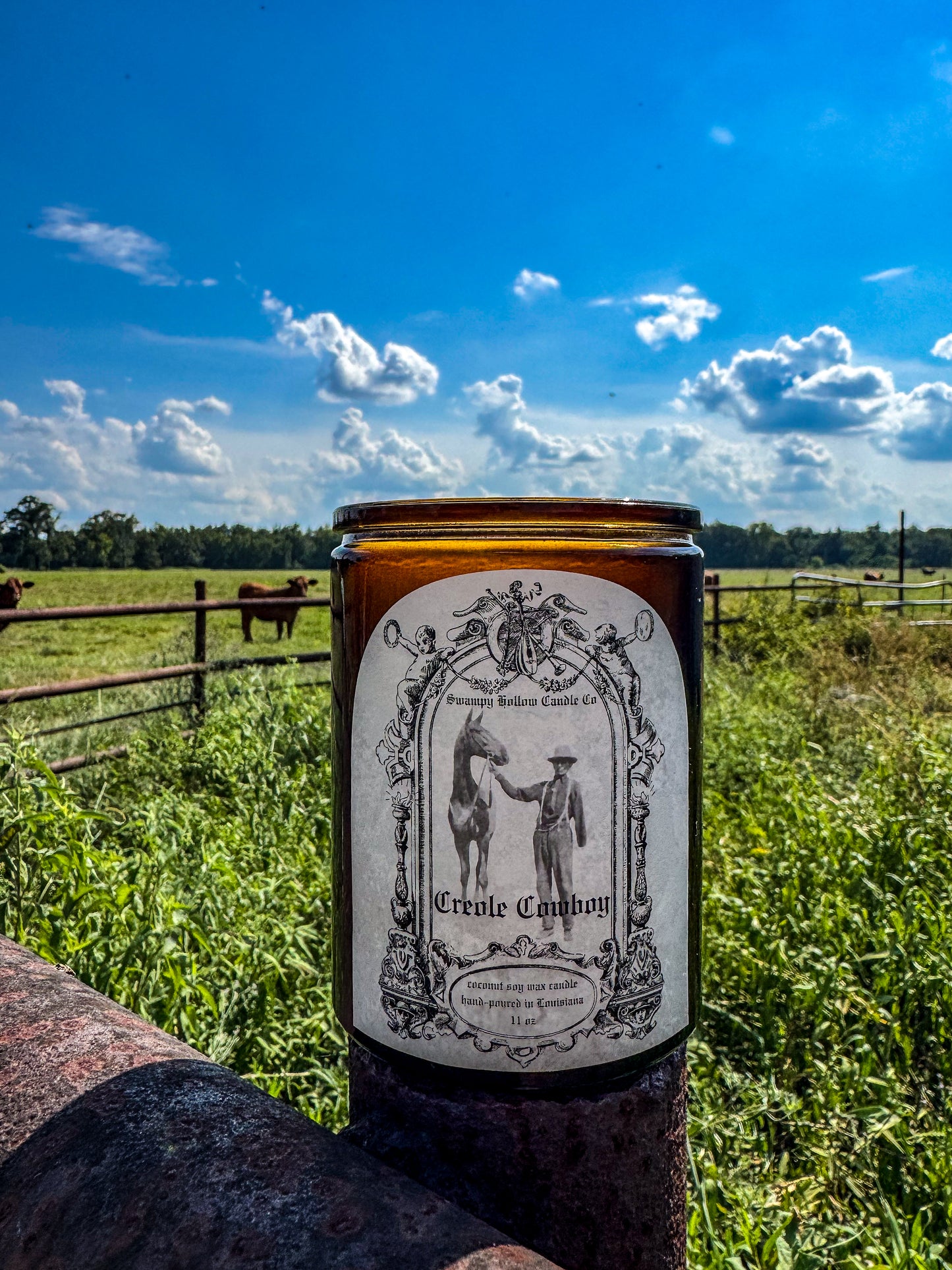
Swampy Hollow Candle Co
Creole Cowboy
Creole Cowboy
Couldn't load pickup availability
Creole Cowboy
smells like genuine leather. saddle shop
Top Notes: Warm, freshly tanned leather
Heart Notes: Supple suede, subtle wood grain
Base Notes: Golden amber, soft musk
In the late 19th and early 20th centuries, Louisiana’s cattle industry had its own brand of cowboy—known as the Creole cowboy. These skilled horsemen were often of Creole heritage, blending African, French, Spanish, and Native American ancestry. They worked the prairies of southwest Louisiana, herding longhorns and other cattle breeds to market along routes like the Opelousas Trail.
The Opelousas Trail stretched from the rich grazing lands near Opelousas and St. Landry Parish eastward toward New Orleans. Before the age of refrigerated transport, cowboys would drive thousands of cattle on horseback, sometimes taking weeks to cover the distance. Along the way, they navigated marshes, prairies, and bayous—facing sudden storms, swarms of mosquitoes, and unpredictable river crossings.
Creole cowboys were known for their horsemanship, distinctive attire (often influenced by both Western and Creole styles), and deep knowledge of the land. They were also storytellers, musicians, and carriers of tradition—keeping alive a ranching culture that was uniquely Louisiana.
By the early 20th century, the railroad began replacing long cattle drives, but the legacy of the Creole cowboy remains a proud part of Louisiana’s ranching heritage, celebrated at rodeos, trail rides, and in oral histories passed down through generations.
Featured on the label:
Joseph Cléopha Strauss (1861–1938) — Born in New Orleans to a French father from Alsace and a Creole mother from Opelousas, Cléopha settled in the Vermilion-Carencro region of Louisiana and became known locally as a skilled horse trainer within the Creole ranching world.
Image of Joseph Cléopha Strauss (c. late 19th century) courtesy of MyLHCV.com — public domain.